










THE BRIEF | 24 February 2026 | 12:00 PM SAST
Midday briefing covering U.S. tariff resets, oil volatility, Nigeria’s financial hub ambitions, Congo Basin carbon markets, and South Africa’s budget outlook within a fragile global trade environment.

SOUTH AFRICA | KEY DEVELOPMENTS


Budget Countdown Sharpens Fiscal Focus
Finance Minister Enoch Godongwana is set to table the 2026 National Budget tomorrow, with markets positioning for continued fiscal consolidation. Treasury projections point to a narrowing deficit toward 3.4% of GDP by 2026/27 and a sustained primary surplus above 1%. The rand firmed marginally in morning trade as investors weighed improved revenue collection against external trade risk stemming from renewed U.S. tariff measures. Why it matters: South Africa’s fiscal credibility now hinges on execution rather than rhetoric. With nearly one million taxpayers contributing roughly 60% of personal income tax revenue, any expansionary misstep risks bond market repricing and rating pressure at a time when external volatility is rising.
Broken by:
IOL – https://www.iol.co.za
Moneyweb – https://www.moneyweb.co.za
Reuters – https://www.reuters.com
Trade Exposure Rises as U.S. Tariff Policy Resets
Following last week’s U.S. Supreme Court decision invalidating broad emergency tariffs under the International Emergency Economic Powers Act, the White House pivoted to a 15% temporary global tariff under Section 122 of the Trade Act of 1974. South Africa remains exposed, particularly in auto, citrus, and mineral exports. Analysts warn that even short-duration tariffs may compress export margins and dampen commodity-linked growth projections. Why it matters: South Africa’s recovery narrative—built on energy stabilisation, logistics reform, and improved investor sentiment—remains vulnerable to external shocks. A trade contraction would pressure revenue assumptions embedded in tomorrow’s Budget framework.
Broken by:
Bloomberg – https://www.bloomberg.com
The New York Times – https://www.nytimes.com
CNBC – https://www.cnbc.com
SONA Reform Agenda Faces Budget Reality Test
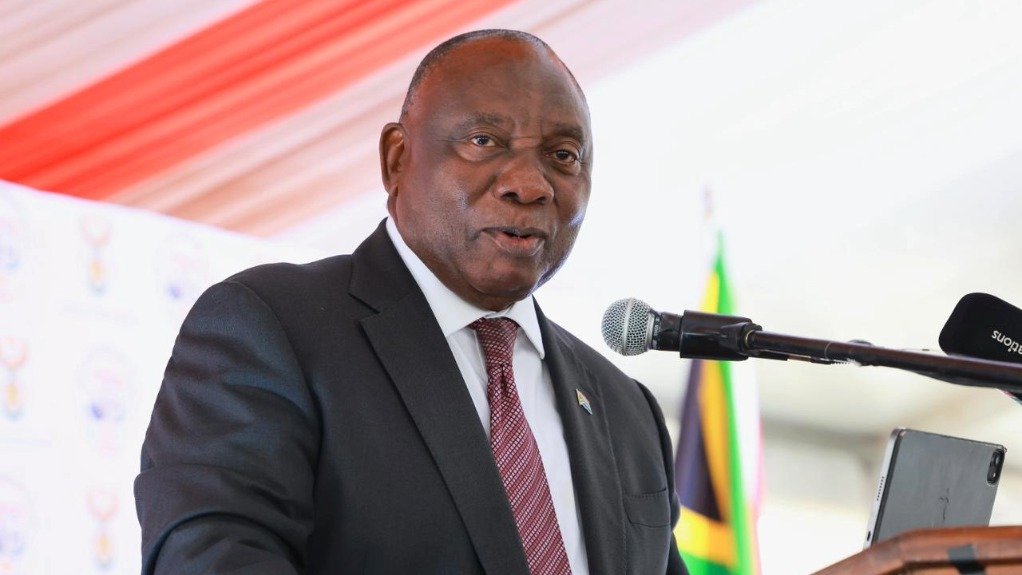
President Cyril Ramaphosa’s February 12 State of the Nation Address continues to frame policy expectations, including infrastructure reform, crime interventions, and public–private collaboration. Operation Vulindlela remains central to structural reform momentum. However, GNU coalition dynamics complicate spending prioritisation ahead of local electoral positioning. Why it matters: Policy coherence between SONA commitments and fiscal allocations will determine whether reform momentum sustains investor confidence or stalls under political compromise.
Broken by:
Financial Times – https://www.ft.com
Central News (Facebook) – https://www.facebook.com
eNCA (YouTube) – https://www.youtube.com
AFRICA | KEY DEVELOPMENTS
Nigeria Positions Lagos as Continental Financial Hub
President Bola Tinubu endorsed the Lagos International Financial Centre initiative at a UK investor forum, reinforcing Nigeria’s ambition to anchor African capital markets. Governor Babajide Sanwo-Olu outlined regulatory and infrastructure reforms aimed at attracting institutional flows. Domestic critics cautioned against parallel public wage pressures that may widen fiscal deficits. Why it matters: Nigeria’s strategy signals intensifying competition among African economies to capture financial intermediation and diversify beyond hydrocarbons. Success would rebalance regional capital flows; failure risks reputational and debt strain.
Broken by:
Arise News – https://www.arise.tv
BellaNaija – https://www.bellanaija.com
AU Expands Digital Governance Fellowship
The African Union opened applications for the third cohort of its Digital & Innovation Fellowship Programme, designed to embed technologists within member-state institutions to accelerate Agenda 2063 implementation. Why it matters: Institutional digitalisation remains uneven across the continent. Targeted technical capacity building could narrow governance gaps, improve public service delivery, and strengthen cross-border integration.
Broken by:
African Union – https://au.int
Congo Basin States Advance Carbon Market Participation
Six Congo Basin nations outlined scaled participation under Article 6 of the Paris Agreement, positioning forest credits as a major financing lever. Analysts estimate multi-billion-dollar potential inflows, though concerns persist around benefit distribution and indigenous land rights. Why it matters: Carbon finance offers fiscal relief and conservation incentives but introduces governance risk. Without transparent frameworks, reputational damage could offset climate financing gains.
Broken by:
Carbon Pulse – https://carbon-pulse.com
WORLD | KEY DEVELOPMENTS
U.S. Tariff Reset Triggers Market Volatility
The U.S. Supreme Court ruling invalidating emergency tariffs removed roughly two-thirds of tariff revenue collection authority, prompting President Donald Trump to invoke Section 122 for a temporary 15% global tariff. Markets reacted sharply: the Dow fell 1.7%, the S&P 500 1%, and the Nasdaq 1.1% on Monday. FedEx filed suit seeking refunds on duties now deemed unlawful. Why it matters: The ruling redefines executive trade authority while introducing short-term uncertainty into global supply chains. Equity volatility and corporate litigation risk may dampen business investment in Q2.
Broken by:
Reuters – https://www.reuters.com
Bloomberg – https://www.bloomberg.com
The New York Times – https://www.nytimes.com
Oil Climbs on Iran Escalation Risk
Oil prices reached six-month highs after President Trump warned Iran of severe consequences amid stalled nuclear negotiations, coinciding with Russia–Iran military drills. Energy markets priced in heightened disruption risk. Why it matters: Elevated crude prices compound inflation risk globally and may constrain central bank flexibility, particularly in emerging markets dependent on imported energy.
Broken by:
CNBC – https://www.cnbc.com
Europe Marks Four Years Since Ukraine Invasion
On the fourth anniversary of Russia’s invasion of Ukraine, European policy forums emphasised defence spending acceleration and industrial rearmament. Chatham House analysis noted stalled diplomatic channels and persistent attrition dynamics. Why it matters: Sustained military expenditure reshapes fiscal trajectories across Europe and entrenches a longer-term security realignment within NATO and EU frameworks.
Broken by:
Chatham House – https://www.chathamhouse.org
Euronews – https://www.euronews.com
BOTTOM LINE
| Time horizon: | Last 12 hours |
| Signal strength: | High |
| Pattern: | Trade fragmentation, fiscal consolidation pressure, and energy volatility converge. Governments are recalibrating policy levers defensively rather than pursuing structural expansion. External shocks now represent the primary downside risk to fragile recovery narratives in emerging markets, including South Africa. |
What's Your Reaction?