












THE BRIEF | 08 April 2026 | 12:00 PM SAST
Global markets rally as a US–Iran ceasefire eases oil prices, lifting South African assets while political and security risks persist locally and across Africa.


SOUTH AFRICA | KEY DEVELOPMENTS
South African Markets Rally on Ceasefire Relief


Local financial markets responded immediately to news of a temporary ceasefire between the United States and Iran, with the rand strengthening more than 2% against the dollar in early trade, government bonds firming, and the JSE advancing as global risk sentiment improved. The easing of oil prices below $100 a barrel has direct implications for South Africa’s inflation outlook, given its dependence on imported energy, providing short-term relief to consumers and policymakers while stabilising cost pressures across transport and manufacturing. However, analysts caution that the rally remains contingent on the durability of the ceasefire, with any breakdown likely to reverse gains quickly and reintroduce volatility into currency and bond markets.
Sources: Reuters – https://www.reuters.com Business Day – https://www.businesslive.co.za
Coalition Dynamics Intensify in Gauteng and DA Leadership Contest
Political positioning in Gauteng continues to evolve as Premier Panyaza Lesufi’s cabinet reshuffle draws criticism from opposition parties, who argue it consolidates power ahead of broader coalition negotiations. Emerging analysis suggests that a potential ANC–EFF–Patriotic Alliance alignment, already visible at municipal level in Johannesburg, could serve as a template for provincial or national coalitions post-2026 elections, raising questions about governance stability and policy direction. Simultaneously, the Democratic Alliance’s upcoming congress has sharpened internal contestation, with competing leadership endorsements signalling a possible recalibration of party strategy, while regulatory tightening by Icasa on election broadcasting introduces a parallel debate over balancing misinformation control with political expression, a tension that may shape campaign dynamics in the months ahead.
Sources: Daily Maverick – https://www.dailymaverick.co.za TimesLIVE – https://www.timeslive.co.za
Ramaphosa Launches TRC Reparations Housing Initiative
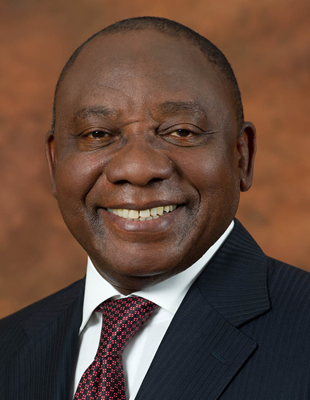
President Cyril Ramaphosa officiated the rollout of the TRC Housing Assistance Reparations programme, handing over homes to apartheid-era victims in what government has framed as a long-overdue fulfilment of restorative justice commitments. While positioned as a moral and symbolic milestone aimed at addressing historical inequities, critics argue the initiative arrives decades late and risks being perceived as insufficient relative to the scale of unresolved socio-economic disparities, underscoring the persistent gap between policy intent and lived reality in post-apartheid redress efforts.
Sources: SAnews – https://www.sanews.gov.za
AFRICA | KEY DEVELOPMENTS
Nigeria Violence Underscores Persistent Security Crisis
At least 20 people were killed and several abducted in coordinated attacks on villages in northwestern Nigeria, according to early reporting, marking another episode in a sustained pattern of banditry and insurgency that continues to destabilise the region. The absence of an immediate claim of responsibility reflects the fragmented nature of armed groups operating across the Sahel corridor, complicating state response and regional coordination while reinforcing investor and humanitarian concerns about security deterioration in one of Africa’s largest economies.
Sources: Reuters – https://www.reuters.com
Benin Presidential Race Signals Continuity Strategy
Benin’s Finance Minister Romuald Wadagni has launched his presidential campaign under the ruling party, pledging continuity in economic reform and fiscal management. The contest is likely to serve as a test of institutional stability and governance credibility within ECOWAS, particularly as regional blocs face mounting scrutiny over democratic standards and anti-corruption enforcement, with outcomes carrying implications for investor confidence in West African reform trajectories.
Sources: Reuters – https://www.reuters.com
WORLD | KEY DEVELOPMENTS
US–Iran Two-Week Ceasefire Takes Hold Amid Strategic Fragility
A two-week ceasefire between the United States and Iran has taken effect following intense missile exchanges and threats to Gulf shipping routes, with Washington conditioning the pause on the reopening of the Strait of Hormuz and Tehran signalling compliance through a temporary halt in counter-attacks. Brokered with reported support from Pakistan, the agreement has triggered an immediate drop in global oil prices and eased pressure on energy markets, yet underlying tensions remain acute as both sides frame the outcome as a strategic win, limiting space for durable compromise. The situation is further complicated by great-power dynamics, with China and Russia vetoing a UN resolution on maritime protection, and by internal US intelligence warnings highlighting ongoing Iranian threat capacity, reinforcing the view that the ceasefire is a tactical pause rather than a structural resolution, leaving global markets and diplomatic channels highly sensitive to any breach.
Sources: Reuters – https://www.reuters.com
Corporate and Regulatory Pressures Shape Market Landscape
FirstRand is assessing a potential exit from its UK motor-finance division after absorbing a R17-billion hit linked to regulatory claims, signalling a strategic recalibration that reflects tightening compliance environments in developed markets. Concurrently, pharmaceutical companies are pressing South Africa’s Health Department for clarity on pricing controls, while Eskom continues negotiations over a chrome-power export deal that could unlock additional revenue streams, illustrating the intersection of regulatory policy, corporate strategy, and fiscal pressure in shaping both domestic and international business outlooks.
Sources: Business Day – https://www.businesslive.co.za
BOTTOM LINE
| Time horizon: | Last 24–48 hours |
| Signal strength: | High |
| Pattern: | Tactical geopolitical de-escalation is driving short-term market relief, but unresolved structural tensions—both globally and domestically—indicate elevated risk of reversal, with volatility likely to persist beneath the surface stability. |
What's Your Reaction?