
















Comment & analysis: Who will save Tongaat-Hulett?
Insolvency practitioners and their lawyers are the hyenas of the economic system that our laws attempt to regulate. One does not have to like their occasional cackle or bloody jaws; they are an important part of the ecosystem. But, to... The post Comment & analysis: Who will save Tongaat-Hulett? appeared first on AmaBhungane Centre for Investigative Journalism.

Insolvency practitioners and their lawyers are the hyenas of the economic system that our laws attempt to regulate.


One does not have to like their occasional cackle or bloody jaws; they are an important part of the ecosystem.
But, to extend the animal metaphor, if they collude with lions to corral their prey and feast not upon the sick and weak, but cut off the escape of the viable, they step outside their assigned role and the professional deference it enjoys.
Investigative journalism takes time and money. Help us do more. Become an amaB supporter.
The business rescue of Tongaat-Hulett Limited (THL) has arguably been just such a bloody charade, implicating both the Business Rescue Practitioners (BRPs) and Vision Investments 155, the consortium that, despite the failure of its business rescue plan, still wants to ingest THL.
What they have done, whether in coordination or not, is herd THL into a cul-de-sac at the edge of a cliff.
There is no escape, only the dire choice of plummeting to economic oblivion one way – or being devoured by predators the other way.
For some of us who have watched this process closely, this endpoint was predictable, but not inevitable.
But now we are here, the lions and hyenas get to say: we’re very sorry, but there’s nothing we can do.

It is infuriating, given the potential social and economic costs.
Now that all the court papers have been filed in the application by the BRPs to place the sugar giant in final liquidation, it is an appropriate point to take stock of where we are and how we got here.
This is important not only for decisions about the future of this rural anchor company, but also about the need to reform the insolvency industry (and not just because of the bottom-feeders it can attract).
But first, let’s sketch out the terrain.
The parties
There are a host of parties who have entered the fray to oppose the liquidation of THL – due to be heard on 16 April 2026.
This group does not include Vision, the consortium led by South African tycoon Robert Gumede and Zimbabwean businessman Rute Moyo.
“There is no escape, only the dire choice of plummeting to economic oblivion one way – or being devoured by predators the other way.”
It will be recalled that the Vision consortium was backed by the “Lender Group” of banks (led by Standard Bank) which was the largest secured creditor to THL.
The banks had forced THL into business rescue when it could not restructure its debt fast enough to suit them.
Vision later reached a side deal with the banks to buy the debt claims and the accompanying security that the banks held over THL assets, putting them in a position to ensure acceptance of Vision’s own business rescue plan at the creditors vote in January 2024.

Vision now holds a massive R11,7-billion secured debt over THL – handed over by the banks at a massive discount – although the legality and enforceability of Vision’s preferential status is heavily contested by its bitter rival, Mozambican sugar group RGS.
Nevertheless, Vision now has the whip-hand in any liquidation, giving them no incentive to actively oppose it.
That has not prevented them from joining the court process to counter allegations made in the papers against Vision – and in a rather transparent bid to pressure government to give them more money to subsidise their takeover of THL.
Opposing the liquidation are:
- RGS, which has also lodged a counter application to set aside the Vision business plan and to force both Vision and the BRPs to make various financial disclosures, pending an RGS attempt to revive its own alternative business plan;
- The Industrial Development Corporation (IDC) which put up a R2.3-billion facility to fund THL during the extended business rescue process, which it wants repaid or restructured;
- The Minister of Trade Industry and Competition, Parks Tau;
- The SA Cane Growers Association and Abrina, a small individual grower.
Those opposing parties are unanimous about the catastrophic consequences of THL’s liquidation – and all contend that the company remains capable of rescue.
While RGS has long been at the forefront of criticism of both the BRPs and Vision, both the IDC and the minister are more outspokenly critical than expected, suggesting Vision’s public relations machine may have lost traction.
The IDC and the minister
Understandably, both the minister and the IDC are deeply concerned about the wider damage that will be delivered by the collapse and liquidation of THL.
The IDC notes, “In a liquidation, inventory will fall to be realised under forced-sale circumstances. Debtor recovery will be severely impacted. Market confidence will erode. The benefits of ongoing trading will be lost. Mills will cease operations, and the likelihood of the mills being able to restart will worsen over time.”
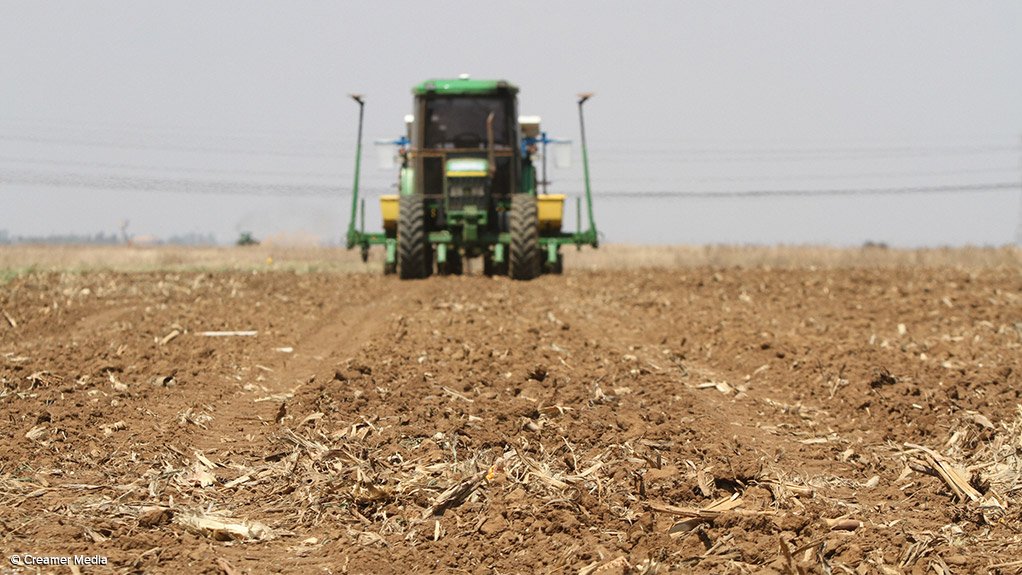
As it point outs, over 15,000 small-scale growers fall within the THL catchment area; there are also 435 commercial growers and THL, at the peak of its operations, directly employs approximately 2,550 people.

The IDC and the minister also argue that failure of an adopted business rescue plan – the Vision plan – does not necessarily mean that the business rescue has failed.
The IDC offered to extend its R2.3-billion Post Commencement Finance (PCF) facility to satisfy THL’s working capital requirements, provided the company remained under business rescue – and “has left the door open” for additional financing to address the current operating cash shortfall.
Much of the IDC’s affidavit is taken up with the sad story of how it was strung along by Vision and harried by the BRPs – but the institution has failed to account for its own acquiescence in the conduct of which it complains.
Vision had boasted back in 2023 that it had done a deal with the banks to buy the THL debt, seemingly on the back of an expectation of funding from the Public Investment Corporation (PIC) – which never came.
Vision repeatedly failed to meet the deadline for paying the banks, but finally finessed the deal in January 2024, making what was later revealed as merely a R1.6-billion ‘deposit’ to secure the cooperation of the Lender Group.
The origins of that cash remain obscure, but since then Vision has leaned entirely on the IDC to put up the rest of the money to complete the THL takeover.
In April 2025, the IDC gave conditional approval to a R4.05-billion funding package to enable Vision to conclude its acquisition of the Lender Group claims, restructure the PCF and allow for the recapitalisation of THL.
No agreements were finalised.
Despite this, the IDC proceeded (arguably recklessly) to guarantee a R1.3-billion Standard Bank loan to Vision, which finally enabled Vision to complete the acquisition of the Lender Claims in May 2025.
In doing so the IDC gave away its remaining leverage on Vision, the banks and the business rescue process.
The result was Vision upped its demands, requesting multiple write‑offs, cost transfers, and funding reallocations totalling R5.3-billion (R1.3-billion above the original IDC approval) – although Vision blamed these shifts on deterioration in the sugar industry driven by cheap imports.
In parallel the BRPs issued multiple letters threatening to file for liquidation if the IDC did not provide R600-million more in working capital – and reach a deal with Vision.
The IDC was left to beg Vision and Standard Bank to either join them in putting in more working capital or at least release security in the IDC’s favour – both of which were refused.
In a final bid to head off liquidation the IDC agreed to provide R200-million extra in PCF cash (on top of the R2.3-billion facility) but conditional on an independent audit of the amounts charged by the BRPs for remuneration and expenses during the business rescue and agreement that their remuneration be limited to the statutory tariff applicable.

A few days later the BRPs lodged the liquidation application.
In its papers the IDC complains extensively but ineffectually about the cavalier way it alleges both the BRPs and Vision have behaved – but it offers little more than wishful thinking, both legally and practically, for bringing either to heel.
It does not even have the stomach to support the RGS counter application to have the Vision business rescue plan set aside – which is at least a coherent legal strategy.
Instead, the IDC is reduced to asking the court for more time to make a deal, without ever disclosing how it will manage the self-interest of its negotiating partners any better than it has up to now.
The minister at least is more forthright than plaintive, noting, “A business rescue plan cannot succeed if stakeholders deliberately frustrate its implementation … The failure lies not in THL’s viability but in Vision’s unwillingness to honour its commitments. This conduct should not be rewarded by liquidation, nor should it be allowed to derail a rescue process that remains capable of success.”
On the BRPs he is equally clear: “The Companies Act, under which BRPs operate, falls within my purview as Minister. Where its provisions are abused or perverted to force liquidation against the public interest, I am duty-bound to intervene. The BRPs’ application reflects such a misuse: instead of pursuing rescue in good faith, they seek liquidation as a shortcut, contrary to the Act’s purpose.”
Yet the minister can offer little practically except goodwill and the promise that he is “engaging with stakeholders within the industry to find a solution to the current crisis”.
“The failure lies not in THL’s viability but in Vision’s unwillingness to honour its commitments.” — Minister of Trade, Industry and Competition
The BRPs are so easily able to bat away these complaints and objections that you can almost hear a cackle through the legalese.
The BRPs
The BRPs and their lawyers deliver a master class in arguing how everyone must face the reality that THL is off the edge of a cliff.
But they do this without once acknowledging any role in guiding the company to this point or in disregarding the warning signs along the way. Instead, they pour scorn on the IDC and blame the corporation for not simply rolling over to accommodate demands.
“The IDC has not provided this Honourable Court with a single objective or factually tenable basis as to why this Court should exercise its discretion in refusing the relief sought by the BRPs [the liquidation]…
“The IDC’s contentions… constitute an ex post facto defence of and rationalisation for its failure to (i) conclude an agreement with Vision and (ii) provide the desperately needed funding required by THL and are belatedly advanced to support its unjustified opposition to these proceedings.”
“The IDC’s proposals amount to speculative optimism unsupported by concrete commitments. There is no:
– binding funding commitment;
– clearly identified alternative to the failed [rescue] Plan;
– stakeholder commitment from Vision; and
– realistic timeframe for achieving the objectives of business rescue.”
The BRPs point out THL has been in business rescue for over three years without achieving rescue but offer no accounting of their own role in that failure.
Instead, they point to the “significant changes in the sugar industry and trading conditions” that have necessitated further funding “which all opposing parties refer to at length but which none have actually provided”.
They point out that if they there is no reasonable prospect of rescue, the BRPs are statutorily obligated, with no discretion, to apply for liquidation regardless of the consequences.
Ultimately, they declare, “hope is not a strategy” – without acknowledging the irony that their two-year extended bet on Vision appears, on the BRPs own final version, to have delivered nothing but dashed hopes.
Indeed, the BRPs spent years and millions of THL rands to stave off multiple legal efforts by RGS to force them to substantiate the bona fides of the Vision rescue plan – which RGS has disputed since 2023.
Now that plan has failed, now the BRPs blame Vision.
“Vision imposed conditions not contained in the Adopted Plan. In amplification, Vision has demanded ‘an in-principle reform to the sugar industry and its legislative framework’ – a requirement that was not contained in the Adopted Plan, was outside the control of the BRPs, and… caused nothing but further complications and delays.
“Moreover, Vision required, not a mere refinancing of the PCF Facility, but a much larger IDC Facility which contained an onerous debt to equity conversion and write-off features which were unacceptable to the IDC and which led to the breakdown in negotiations.”
Yet the BRPs elide the fact that until the 11th hour they fully backed all Vision’s demands and did not seek to curb them as unreasonable.
As Vision points out in their own papers, “While criticising Vision for having insisted on market reform to address systemic issues, the BRPs urgently sought and demanded it… It was the BRPs who wrote to the Minister of the DTIC stating that such reforms were ‘critical to restoring sustainability, stability, fairness and competitiveness across the sugar value chain’ and ‘essential to ensure the future viability of THL’.”
And the record shows that for months the BRPs appeared to act as a sort of tag team with Vision, ratcheting up the pressure by repeatedly warning the IDC that they were on the verge of concluding that THL could not be rescued.
On the BRPs’ version, it was only when Vision tried to get them to transfer some of THL’s foreign assets behind the back of the IDC that the scales fell from their eyes.
Now they have belatedly distanced themselves from Vision’s alleged gamesmanship.
“Vision’s imposition of conditions not contemplated by the Adopted Plan is conduct inconsistent with the binding terms of the Adopted Plan that Vision itself proposed; having frustrated the Adopted Plan through its own conduct, Vision then issued a formal demand on 8 February 2026 declaring all Senior Facility Outstandings immediately due and payable in the amount of R11,738,406,991.00. This is not the conduct of a party committed to the success of business rescue; it is the conduct of a party that has concluded that rescue is no longer achievable.”
Elsewhere they add, “These default notices were issued in circumstances where Vision had itself precipitated the lapse of the Sale Agreements through its refusal to grant the extension required by the IDC. The issuance of such notices, despite the application of the moratorium in business rescue was symptomatic of Vision’s approach throughout — prioritising its own commercial interests over the rescue of THL.”
If this was the BRPs view of “Vision’s approach throughout”, then the record shows they never acted on that perception until it was too late – and suggests they were negligent in failing to safeguard the rescue process.
And, notwithstanding the recently expressed outrage, the BRPs have persisted with a deferential stance towards Vision.
As they did with the Lender Group from the start, they continue to grant Vision an unquestioned veto over the process – instead of critically examining that veto, as they have been repeatedly urged to do.
They tell the court, “All the objecting parties ignore Vision – which is the major secured creditor of THL … No restructuring can succeed without its cooperation. Vision’s conduct demonstrates that such cooperation and support is a chimera and will not be forthcoming.”
They say any attempt to introduce an alternative or amended Business Rescue Plan will run up against opposition from Vision and “THL does not have the liquidity to sustain its operations during such an extended process”.
While the BRPs set out a list of Vision’s failures, it’s also a revealing mirror of their own failure to secure compliance – or intervene when it was clear that Vision would or could not comply.
The BRPs say the Adopted Plan, as proposed by Vision and adopted by THL’s creditors, contained specific critical conditions – none of which were eventually met.
These included:
- confirmation of the refinancing of the IDC R2.3-billion PCF, to be assumed by Vision;
- discharge of THL’s indebtedness to the SA Sugar Association of R517 million; and
- the provision of R75-million for concurrent creditors.
“Critically, the Adopted Plan does not prescribe any condition relating to Vision raising additional funding from the IDC or anybody else beyond the PCF refinancing …”
This is indeed critical.
No-one said anything about raising additional funding to meet these required payments because the BRPs acted on the assumption that Vision had access to the funding needed to implement the plan.
Whether that was a reasonable assumption or a reckless one is the core of the RGS case.
RGS – show me the money
There are four legs to the RGS counter application, but the most important one is a call for the court to set aside the Vision Plan as unlawful.
That would send the business rescue process back to square one – and allow RGS to put its own plan on the table for a vote.
The core argument here is about Vision’s funding – or the lack of it – and alleged failure to disclose the true funding situation and the highly contingent nature of Vision’s rescue plan.
RGS states, “The Vision Plan does not disclose that its coming into force and/or its full implementation have always been conditional on Vision obtaining loan funding to both (i) acquire the Lender Group Claims … and (ii) to discharge its principal obligations under the plan [the three unmet critical conditions mentioned above].”
RGS argues disclosure of these conditions was mandatory in terms of section 150(2)(c)(i) of the Companies Act, which stipulates a section of a rescue plan must set out the “assumptions and conditions” required for the plan to come into operation and be fully implemented – and was therefore not complied with.
“On the contrary however, at the Creditors Meeting, and to induce the adoption of the Vision Plan, Vision and the BRPs repeatedly represented to creditors (who had expressed serious concerns about Vision’s access to funds) that Vision had sufficient funds in cash to implement the Vision Plan, which cash funds had been confirmed to the BRPs in terms of a letter issued by Standard Bank.”
We’ll get back to the Standard Bank letter (which may yet come back to bite the bank) because it is pivotal, but the crisp point RGS makes is that Vision never had the money, the deal with the banks was only completed 16-months later using a loan from Standard Bank guaranteed by the IDC, and the further wrangling with the IDC over funding shows Vision still lacks the funds to meet the three critical conditions of its own rescue plan.
The issue is whether that funding deficiency was or was not disclosable – and in fact disclosed or not.
The BRPs say the letter is “clear and unequivocal”, recording –
• Vision holds a Standard Bank Account;
• the account has sufficient cash for Vision to execute the contemplated transaction as per the amended Vision Business Rescue Plan dated 20 December 2023;
• the account has sufficient cash to meet the proposed payment to unsecured creditors of R75,000,000 as per the amended Vision business rescue plan dated 20 December 2023.
But the BRPs dance around what this letter actually means.
And Standard Bank obviously became uncomfortable with the “clear and unequivocal” meaning because, as RGS sets out in its papers, the Lender Group at the last moment amended the commitments set out in the rescue plan in response to intense questioning about this point.
The draft of the business plan presented for a vote at the creditors meeting stated (following the wording of the letter): “The Lender Group and the BRPs have received proof that the Vision Parties have sufficient cash to execute the contemplated transaction as per the Business Rescue Plan.”
But pursuant to the large degree of scrutiny from creditors about the actual security of funding, the Lender Group stood down the meeting twice and eventually had it postponed a third time to the next day.
When the meeting reconvened, this assurance was gone, with the Lender Group and the BRPs declared to have received proof merely that a “substantial cash deposit” was held in a bank account in South Africa.
RGS says the amendments were not provided to creditors at all prior to adoption and were pushed through on the basis of the Lender Group’s and Vision’s votes with the amended text simply being displayed on screen and adopted immediately.
The BRPs claim the fact that the Lender Group chose to amend the wording of the Vision proposal “does not invalidate the adopted plan or gainsay the BRPs previous statements in relation to it”, adding, “It is denied that the BRPs were in any way delinquent in relying on or representing the status of Vision’s funding.”
But RGS argues that legal precedent holds that any change in the funding on which an adopted plan is premised must be approved by creditors and cannot be amended by practitioners unilaterally.
As instances they point not only to the sleight-of-hand at the January 2024 creditors meeting, but argue that by April 2025 (at the latest) the BRPs became aware of the extent of IDC funding required by Vision to implement the rescue plan and its demands for wide-ranging structural reforms to the sugar industry.
RGS cites the BRP’s own characterisation: “Vision’s imposition of conditions not contemplated by the Adopted Plan is conduct inconsistent with the binding terms of the Adopted Plan that Vision itself proposed.”
At that point at the very latest, they argue, the BRPs were under a legal obligation to take the changed plan back to creditors for approval – but did not do so.
Importantly, RGS say it is not true that there are no viable alternatives on the table and they foreshadow delivering a new rescue plan, which, in the weeks since the papers were filed, it is understood they have presented to both the IDC and the BRPs.
RGS is very angry with the BRPs, who have fought them every step of the way, though they have been proven correct in many of their expressed suspicions about the fragility of the Vision bid.
RGS states, “The Court should not in the specific circumstances of this case afford any preference to the views expressed by the BRPs because their conduct has been instrumental in creating the crisis that now confronts THL and risks the livelihoods of some 250 000 people in Kwa-Zulu Natal.
They allege, “In summary, the BRPs knowingly implemented the Vision Plan unlawfully… the BRPs failed to provide Affected Persons with any meaningful information regarding the real
status of THL’s business rescue and the implementation of the plan (in breach of section 132(3) of the Act), the BRPs failed to ensure that the Lender Group Claims Acquisition Agreement was implemented lawfully, the BRPs failed to verify the validity, effectiveness and extent of the security held by Vision; the BRPs and Vision made material misrepresentations to creditors regarding cash funding which Vision did not have and which induced the adoption of the plan, Vision’s conduct has been predatory and exploitative in circumstances where its delays have caused material prejudice to THL, and Vision has contributed nothing of any substantive value to THL.”
Vision
Vision’s papers, by contrast, have the breezy insouciance of someone who just pulled off a particularly good caper.
Weighing in on the RGS counter application, they note, “Self-evidently, none of this relief has any bearing on the question of whether there is any reasonable prospect of THL being rescued, and its inclusion in an urgent counter-application is a serious abuse of process.
“RGS has said, time and again, that its real interest and motive in this, and the prior applications, is to challenge the Vision Plan so that RGS can put up its own (new) plan. In this vein, it has brought or been responsible for numerous applications before this Court, most notably to interdict the implementation of the Vision Plan. It has failed on each occasion.
“But in any event, the BRPs cannot wait for RGS’s grandiose schemes to play out. There is a solution needed now. Other than Vision, no person has put forward anything that is even conceptually feasible, that is capable of addressing the current liquidity crisis and the long-term sustainability of THL.”
The response to RGS is largely to challenge their credibility and raise technical points as to why their arguments should be dismissed.
Vision pours scorn on doubts raised by RGS about the claims and security it inherited from the banks, calling them a “conspiracy theory”.
On the bid to mount an alternative rescue plan, Vision is equally dismissive given that it holds nearly all the voting power based on its purchase of the Lender Group claims.
“No BRP could reasonably propose a plan that has no prospect of being adopted, and even if this were possible, would inherently entail yet another application to Court, which self-evidently would be opposed by Vision, if not the BRPs themselves, all the while in the knowledge that THL would have no assurance of being funded in the interim. This is sheer lunacy.”
It says the attempt to have the Vision plan set aside is not urgent, is legally incompetent and is the subject of a pending application in another court (i.e.lis pendens) and therefore is out-of-bounds for the liquidation court to consider.
Vision argues against looking back in search of blame for the collapse of the Vision plan – although that is understandable because a judge taking a critical look at that history might well be the key to unlocking the present impasse, which benefits only Vision.
Vision argues the Court is enjoined to inquire whether “there is no reasonable prospect for the company being rescued” and the Act does not ask who caused this situation.
“Vision submits that the Court… should not attempt to unravel this knot or, as the BRPs suggest, resolve the various factual disputes on these issues in their favour, and determine the cause. This is neither necessary nor appropriate, especially in the context of an urgent application of this magnitude.”
Nevertheless, they point out the inconsistencies in the BRPs’ version blaming the collapse of the plan on Vision.
“Vision contends that the true cause of the situation which THL finds itself in, was the BRPs’ revelation during October 2025 that THL required an additional R600-million in PCF to be in a position to pay its debts as they fell due, and that the cause of this additional R600 million requirement was owing to, among other things, systemic issues in the South African sugar industry that called into question THL’s viability.
“Suddenly, an additional R600 million had to be urgently provided, amid questions about the viability of THL’s business. The R600 million represents a 26% increase in the PCF catered for in the Vision Plan (which, under the Vision Plan as it stands, Vision would be expected to absorb on conversion or settlement of the PCF). This resulted in an inability to progress the implementation of the Vision Plan until this additional issue had been resolved.”
It is notable that this R600-million shortfall in working capital – the casus belli for both the BRPs and Vision – has never been substantiated by the BRPs, nor even up to now has the Court been furnished with detailed accounts showing THL’s actual financial state.
On the thorny issue of the Standard Bank letter, Vision happily doubles down, noting “RGS devotes a significant portion of its answering affidavit to setting out the statements made during the meeting and the impression formed by creditors, and how the Standard Bank letter is to be read. This is all denied by Vision …”
But what is important, Vision notes, is what the final Vision Plan provided (as adopted on the second day after the amendments by the Lender Group).
This, Vision argues, disclosed clearly that Vision would acquire the bank claims only “after” the adoption of the Vision rescue plan and claimed only that there existed a “substantial cash deposit” not that its plan was “fully funded”.
“There was no misrepresentation and nothing untoward about Vision completing the acquisition of the Lender Group’s claims at a later stage (which eventually occurred on 9 May 2025).”
Conclusion
The fact that the THL business rescue has dragged on for more than three years without judicial oversight is one of the major flaws in how the Companies Act is currently structured.
Many parties – and not just in this case – have been at liberty to prioritise their “own commercial interests” over the broader public interest in the recovery of companies in distress.
In the old days companies were able to be placed under judicial management, but judges had neither the time nor, sometimes, the skills to take on that level of responsibility. It didn’t work.
“We have to act now … or watch a million lives unravel one tonne at a time.” — SA Sugar Association
The introduction of more modern business rescue processes privatised and in some ways professionalised the business rescue process, but the legislation left practitioners largely to their own devices.
But it was not meant to be that way.
Retired Judge Dennis Davis, who was among the key drafters of the new legislation, told amaBhungane that judicial oversight of the rescue process was built into the draft Bill, but was abandoned by the department of trade and industry – over the objections of the technical advisory committee.
It is time that gap was filled again.
In relation to THL, it is clear, no matter who you choose to believe, that there have been abuses – or at best missteps.
It is unfair to now place the burden of this long brewing mess so finally on the shoulders of Judge Rithy Singh.
Unfair but necessary.
As the SA Sugar Association notes, SA’s sugar industry sustains one million livelihoods and contributes R24-billion to the economy annually. We have to act now, they say, or “watch a million lives unravel one tonne at a time”.
In a liquidation application, the discretion opened up for judicial oversight is wide.
Judge Singh can make a difference. She must resist the temptations that will be proffered to throw up her hands make it someone else’s problem.
Though the pool of uncertainty is deep, though she will face ranks of businessmen and lawyers used to getting their own way, she must not be bullied, she must wade in.
Lives depend on it.
Investigative journalism takes time and money. Help us do more. Become an amaB supporter.
The post Comment & analysis: Who will save Tongaat-Hulett? appeared first on AmaBhungane Centre for Investigative Journalism.
What's Your Reaction?