











THE BRIEF | 13 February 2026 | 12:00 PM SAST
Midday Bulletin February 13, 2026: SONA fallout, rand pressure, IMF debt warnings, African growth outlook, U.S. climate deregulation, and global market volatility.

SOUTH AFRICA | KEY DEVELOPMENTS
SONA Aftermath: Optimism Tempered by Structural Constraints
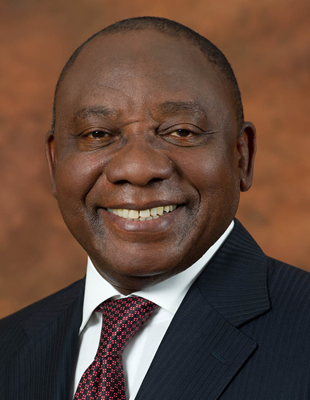
President Cyril Ramaphosa delivered his State of the Nation Address (SONA) at Cape Town City Hall, citing four consecutive quarters of GDP growth, two primary budget surpluses, improved sovereign credit metrics, and the lowest inflation in nearly two decades as evidence that South Africa is “turning the corner.” Growth for 2026 is projected at 1.2%–1.7%, materially below the 3%–4% threshold economists deem necessary to dent unemployment, which remains near 32%, reinforcing concerns that fiscal optics are improving faster than structural capacity. The R7 million event drew praise from segments of business for freight reform momentum and anti-corruption signalling, but opposition parties criticised the absence of granular delivery timelines on water security and municipal infrastructure—gaps that, if unresolved, constrain investment multipliers and debt stabilisation credibility. Reuters led overnight fiscal analysis, underscoring the tension between consolidation goals and persistent service-delivery backlogs.


Broken by:
Reuters – https://www.reuters.com
Rand Softens as IMF Flags Debt Risks
The rand traded around 18.50/$ in morning dealings, reflecting post-SONA positioning and anticipation of domestic data releases. While ETM Analytics noted fiscal improvements and recent ratings support, the IMF reiterated that absent deeper expenditure reform, public debt could approach 84% of GDP by 2031, a trajectory that would narrow policy flexibility and elevate borrowing costs. The Fund supports a 1.5% primary surplus target this fiscal year but cautions that consolidation remains vulnerable to external shocks, reinforcing that currency stability depends more on execution credibility than messaging. Polity aggregated early currency reaction citing Reuters pricing data; Business Report emphasised medium-term debt sustainability risks.
Broken by:
Polity – https://www.polity.org.za
Business Report – https://www.iol.co.za/business-report
Business Confidence Holds, Governance Critiques Intensify
The SACCI Business Confidence Index stabilised at 120.0 in January, marginally lower than December but above November levels, supported by policy continuity under the Government of National Unity (GNU). Export softness and global trade headwinds capped upside, signalling that sentiment resilience has yet to translate into material hiring acceleration. Concurrently, Daily Investor published a critique arguing the administration has eroded its implicit fiscal contract with taxpayers, referencing anti-corruption commitments dating back to 2018, a narrative that may weigh on medium-term investor confidence if governance reform momentum stalls. Reuters provided the initial BCI breakdown.
Broken by:
Reuters – https://www.reuters.com
Daily Investor – https://dailyinvestor.com
AFRICA | KEY DEVELOPMENTS
IMF Projects Africa as Growth Outlier—Debt and Climate Risks Persist
The IMF forecasts Africa will host more 6%+ growth economies than any other region in 2026, with aggregate GDP rising from 2.6% in 2025 to 3.0%, positioning parts of the continent as relative growth outliers. However, debt repayments nearing $95 billion and exposure to climate shocks and political instability temper optimism, raising refinancing and fiscal consolidation risks for vulnerable states. Africanews led coverage of the projections. Concurrent diplomatic uncertainty in Central Africa—particularly mineral-linked developments in the DRC and political transitions in Chad and Gabon—adds fragility, as reported by The Africa Report, reinforcing the uneven distribution of growth momentum.
Broken by:
Africanews – https://www.africanews.com
The Africa Report – https://www.theafricareport.com
Mining Indaba Highlights Scale and Carbon Pressures
The Investing in African Mining Indaba concluded its first day in Cape Town with record attendance, emphasising large-scale development corridors including Guinea’s Simandou iron ore project and blended-finance structures for SME inclusion. The scale narrative underscores mining’s centrality to fiscal revenue and export earnings. Simultaneously, the EU’s Carbon Border Adjustment Mechanism (CBAM), operational from January, increases compliance burdens for industrial exporters such as South Africa, introducing structural competitiveness constraints and potential margin compression in EU-facing sectors. The Assay detailed regulatory exposure risks.
Broken by:
The Assay – https://www.theassay.com
Geopolitical Fragmentation Raises Economic Costs
A CfM–NIESR survey released this morning indicates 97% of surveyed experts view persistent geopolitical tensions as imposing moderate to significant economic costs on Africa via fragmentation, higher defence allocations, and policy uncertainty, dynamics that could crowd out developmental spending. The National Institute of Economic and Social Research (NIESR) published the findings, reinforcing the macroeconomic price of global polarisation.
Broken by:
NIESR – https://www.niesr.ac.uk
WORLD | KEY DEVELOPMENTS
U.S. Climate Deregulation Signals Policy Reversal
U.S. President Donald Trump announced repeal of the Obama-era “endangerment finding,” effectively terminating federal vehicle emission standards through 2027 and framing it as the largest deregulatory action for the auto sector. The move may reduce short-term compliance costs and consumer prices but deepens climate-policy divergence with key trading partners, complicating alignment on carbon-linked trade mechanisms. Roll Call Factba.se transcribed the remarks. Concurrently, the World Economic Forum’s 2026 risk outlook ranks geoeconomic confrontation as the top global threat, a signal that regulatory divergence now carries strategic economic consequences. Mirage News summarised the findings.
Broken by:
Roll Call Factba.se – https://factba.se
Mirage News – https://www.miragenews.com
Markets Slide; Oil Holds Losses Amid CPI Watch
Major U.S. indices closed lower, with the Dow falling over 600 points following strong January labour data (353,000 jobs added, though prior-year revisions showed softness), reinforcing expectations that rate-cut timing may remain data-dependent. Oil prices held near $80/barrel for Brent as supply glut fears offset geopolitical noise, including potential Iran nuclear discussions, highlighting that physical market fundamentals currently outweigh diplomatic signalling. Investopedia and Investing.com provided live market coverage, referencing BCA Research commentary on political capital deployment.
Broken by:
Investopedia – https://www.investopedia.com
Investing.com – https://www.investing.com
Japan Leadership Shift Signals Fiscal Expansion
Fitch Ratings noted that Japan’s new prime minister, Sanae Takaichi, signals a looser fiscal stance following election victory, potentially influencing global bond yields amid elevated sovereign issuance and tightening liquidity conditions. A fiscal expansion bias in a major advanced economy could recalibrate yield differentials and capital flows, particularly across Asia-Pacific debt markets. Fitch’s wire linked the development to broader regional stability considerations.
Broken by:
Fitch Ratings – https://www.fitchratings.com
BOTTOM LINE
| Time horizon: | Last 18 Hours |
| Signal strength: | High |
| Pattern: | Fiscal consolidation narratives are colliding with structural growth ceilings. Policy divergence—on debt discipline, climate regulation, and trade alignment—is increasingly market-relevant, elevating volatility risk into Q2 2026. |
What's Your Reaction?